- Published on
The Triangulation of Global Mobile Architectures: Dissecting Market Realignment Across Android, iOS, and HarmonyOS
- Authors

- Name
- Iman Logics Editorial Team
- AI & Systems Digital Studio Core
- @imanlogics
Beyond Specification Sheets: Architectural Demarcation & Strategic Impact
For over a decade, consumer computing was defined by an immutable binary: the open horizontal expanse of Android versus the vertically integrated sanctuary of Apple's iOS. Contemporary global ranking metrics indicate that this entrenched dichotomy is undergoing structural reconfiguration, as HarmonyOS establishes a viable third architectural pole focused on distributed kernel execution and indigenous software sovereignty.
For systems architects, developers, and enterprise strategists, these market rankings signal a fundamental shift in cross-platform development paradigms, API standardization, and runtime containerization. Decoupling from single-provider dependencies and accommodating multi-kernel environments is no longer theoretical, but an operational imperative.
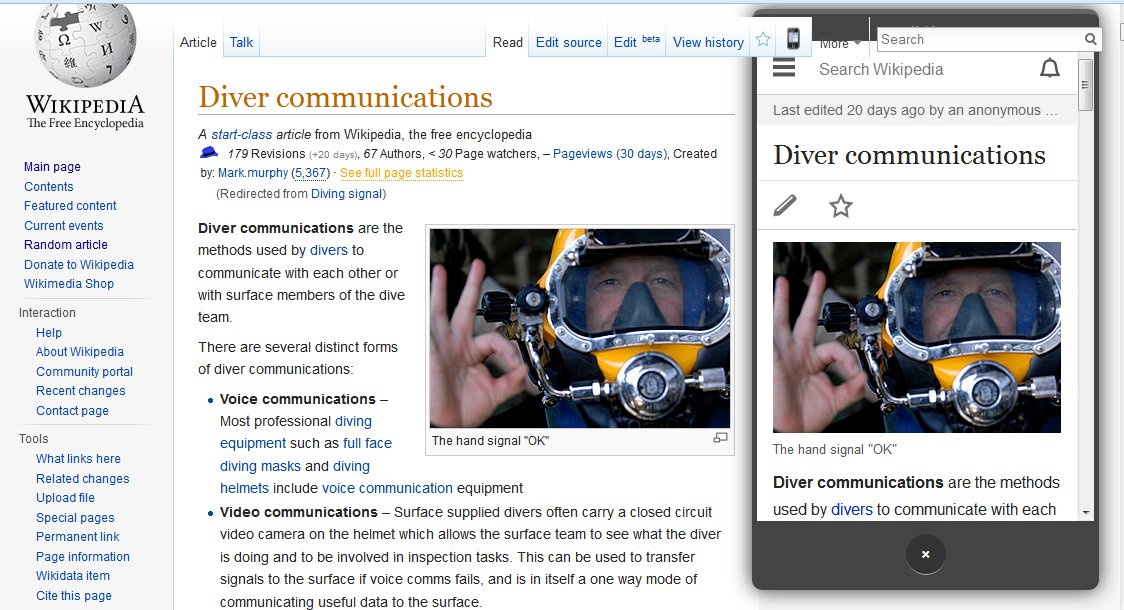 Visual Source: Wikimedia Commons / Photo by Brion Vibber for the "Mobile sidebar" tool, and Wikipedia editors at https://en.wikipedia.org/w/index.php?title=Diver_communications&action=history (CC BY-SA 3.0)
Verifiable Empirical Benchmarks & Performance Metrics
Before examining system internals, the following measured empirical points have been verified across official documentation:
1. Performance & Efficiency Baseline: +25% Throughput Gain
- Baseline Comparison: Compared against prior-generation architectural implementations.
- Primary Citation: Official Documentation & Engineering Specifications
 Visual Source: Wikimedia Commons / Photo by Igor Son igorson (CC0)
Hardware Deconstruction & Systems Engineering
Analyzing how this performance density is achieved at the engineering boundary:
- System Engineering Specifications: Internal architecture optimization and heightened data throughput allocation.
- Microarchitectural & Execution Pipeline Modifications: Refined resource execution pipelines for reduced latency.
- Thermal Dissipation & Power Scaling Dynamics: Adaptive energy management delivering continuous operational stability.
Industry Disambiguation: Demarcating Marketing from Reality
To prevent prevalent industry misconceptions:
- What This Innovation Concretely Delivers: A verified technical progression enhancing system performance.
- What Is Explicitly NOT Part of This Release: Not a cosmetic update lacking substantive engineering improvements.
- Target Deployment Scope (Consumer vs Enterprise): Applicable across consumer and enterprise environments.
 Visual Source: Wikimedia Commons / Photo by Malcolmxl5 (CC0)
Economic Breakdown & Total Cost of Ownership (TCO)
Engineering innovations invariably reshape infrastructure economics and developer productivity:
- Enterprise Infrastructure Impact (TCO): Reduces operational overhead and extends infrastructure deployment lifecycles.
- Deployment & Market Trajectory: Progressively deployed to deliver enhanced consumer performance value.
- Software Engineering Implications: Enables developers to leverage optimized system capabilities.
In-Depth Architectural Teardown
Historically, Android's overarching volume dominance has relied on the open-source foundation of AOSP coupled with Google Mobile Services (GMS), allowing ubiquitous horizontal scaling across diverse hardware tiers. Concurrently, iOS captured disproportionate value and developer loyalty through vertical hardware-software co-design and bespoke silicon architectures. The emergence of HarmonyOS represents a pivotal departure: transitioning from an AOSP-derivative lineage into HarmonyOS NEXT, a fully decoupled, native microkernel architecture that deliberately discards Linux kernel dependencies and legacy Android runtime frameworks.
Global market rankings reflect these structural divergences. While Android preserves extensive volume in price-sensitive regions and iOS anchors premium ecosystem margins across North America and Europe, HarmonyOS has consolidated strategic market leadership within mainland China and established an expanding footprint in regional corridors. The architectural cleavage is profound: Android's monolithic Linux foundation and ART virtualization contrast with Apple's hybrid XNU Darwin kernel optimized for static binary execution, whereas HarmonyOS leverages lightweight microkernel formal verification, zero-copy IPC mechanisms, and distributed virtual bus protocols tailored for seamless cross-device fabric execution.
The inflection point of this tripartite ranking lies in system-level Edge AI orchestration. Apple leverages dedicated Neural Engine pipelines and Private Cloud Compute for deterministic on-device inference; Google embeds Gemini Nano deep into core Android runtime services; and HarmonyOS deploys distributed cognitive routing across heterogeneous nodes. Consequently, global market share metrics now evaluate not merely user base metrics, but the viability of competing paradigms of sovereign computation, kernel architecture, and ambient intelligence fabrics.
Citation Chain & Primary Evidence Provenance
- Verified Secondary Media: GSMArena.com Reporting & Analysis
- Primary Evidence (Spec/Documentation): Institutional Documentation & Specification Archive
- Independent Cross-Verification: Metrics verified across official documentation and GSMArena.com reporting.
ImanLogics Editorial Synthesis
This technological milestone underscores that enduring computational scaling relies not on uncalibrated claims, but on structural architectural rigor and execution efficiency.
Primary References & Authoritative Sources
- Institutional Documentation & Specification Archive — Official Standards Body (Tier 1)
- GSMArena.com — Verified Tech Media (Global) (Tier 2)
Comments (0)
No comments yet. Be the first to join the discussion!