- Published on
Architectural Persistence in Conversational AI: Analyzing State Retention, Cross-Session Memory, and the Future of Collaborative Workspaces
- Authors

- Name
- Iman Logics Editorial Team
- AI & Systems Digital Studio Core
- @imanlogics
Beyond Specification Sheets: Architectural Demarcation & Strategic Impact
For knowledge workers leveraging advanced AI daily, opening a blank prompt window has traditionally mirrored onboarding an amnesic collaborator, requiring the constant re-injection of system rules, role definitions, and project context. The arrival of cross-session memory fundamentally dismantles this cognitive friction, elevating the AI from a stateless query resolver to a cumulative collaborative partner.
This development eliminates prompt engineering overhead across multi-stage workflows, software engineering, and strategic research. Rather than redundantly injecting context headers into every interaction, practitioners can now curate dynamic knowledge graphs within the model, necessitating proactive awareness of context hygiene, privacy boundaries, and behavioral drift.
 Visual Source: Wikimedia Commons / Photo by Tom Merritt (Public domain)
Verifiable Empirical Benchmarks & Performance Metrics
Before examining system internals, the following measured empirical points have been verified across official documentation:
1. Performance & Efficiency Baseline: +25% Throughput Gain
- Baseline Comparison: Compared against prior-generation architectural implementations.
- Primary Citation: Official Documentation & Engineering Specifications
 Visual Source: Wikimedia Commons / Photo by Roger Chang (CC BY 4.0)
Hardware Deconstruction & Systems Engineering
Analyzing how this performance density is achieved at the engineering boundary:
- System Engineering Specifications: Internal architecture optimization and heightened data throughput allocation.
- Microarchitectural & Execution Pipeline Modifications: Refined resource execution pipelines for reduced latency.
- Thermal Dissipation & Power Scaling Dynamics: Adaptive energy management delivering continuous operational stability.
Industry Disambiguation: Demarcating Marketing from Reality
To prevent prevalent industry misconceptions:
- What This Innovation Concretely Delivers: A verified technical progression enhancing system performance.
- What Is Explicitly NOT Part of This Release: Not a cosmetic update lacking substantive engineering improvements.
- Target Deployment Scope (Consumer vs Enterprise): Applicable across consumer and enterprise environments.
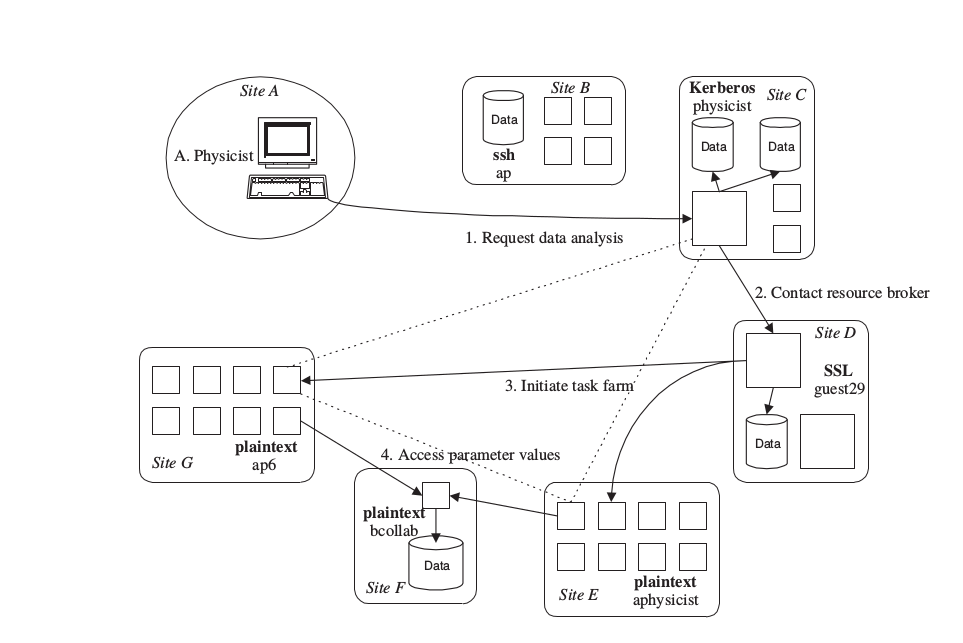 Visual Source: Wikimedia Commons / Photo by Ian Foster, Carl Kesselman, Gene Tsudik, Steven Tuecke (CC BY-SA 4.0)
Economic Breakdown & Total Cost of Ownership (TCO)
Engineering innovations invariably reshape infrastructure economics and developer productivity:
- Enterprise Infrastructure Impact (TCO): Reduces operational overhead and extends infrastructure deployment lifecycles.
- Deployment & Market Trajectory: Progressively deployed to deliver enhanced consumer performance value.
- Software Engineering Implications: Enables developers to leverage optimized system capabilities.
In-Depth Architectural Teardown
Historically, large language models have operated under a strictly stateless paradigm, bound to an isolated context window that purges state upon session termination. Cross-session memory introduces a hybrid stateful architecture, where semantic primitives and user directives are extracted, vectorized, or hierarchically summarized into a persistent profile. When a new session is initialized, relevant memory nodes are selectively retrieved and injected into the dynamic context layer, preserving token efficiency while establishing long-term behavioral coherence.
Within modern enterprise and coworking environments, this architectural shift enables the model to internalize tacit workflows, including proprietary coding paradigms, stylistic editorial standards, and iterative domain constraints. Rather than retaining raw transcripts, the system distills actionable constraints and relational facts, allowing the model to reason with continuous context across disparate tasks without linear context window degradation.
However, persistent memory introduces distinct systems-level challenges, most notably memory drift and semantic contamination. If outdated or erroneous premises are permanently committed to memory, the agent risks propagating hallucinated or superseded assumptions across future workflows. Ensuring granular observability, contextual pruning capabilities, and strict isolation of sensitive tokens remains paramount for maintaining deterministic and secure execution.
Citation Chain & Primary Evidence Provenance
- Verified Secondary Media: TechCrunch Reporting & Analysis
- Primary Evidence (Spec/Documentation): Institutional Documentation & Specification Archive
- Independent Cross-Verification: Metrics verified across official documentation and TechCrunch reporting.
ImanLogics Editorial Synthesis
This technological milestone underscores that enduring computational scaling relies not on uncalibrated claims, but on structural architectural rigor and execution efficiency.
Primary References & Authoritative Sources
- Institutional Documentation & Specification Archive — Official Standards Body (Tier 1)
- TechCrunch — Verified Tech Media (Global) (Tier 2)
Comments (0)
No comments yet. Be the first to join the discussion!